Thursday, September 1, 2022

Working With Anxiety


This week's A Mindful Pause was shared on Sunday night in my talk (hence its length). You can listen to the recorded talk here, but I wanted to include it in written form so that you could come back to the ideas easily.  

The fall is coming. Leaves are falling with some yellow and red speckled here and there. The fall usually comes with a shift in our behaviors; we tend to get busier in a different kind of way than in summer. One of the things that can happen when I get busier is that my anxiety levels rise a bit. It can also happen when there is too much time on our hands, but I thought this might be a good time to talk about how we can use mindfulness and Buddhist teachings to help us with anxiety. If you're not feeling particularly anxious in this month of August, as I am not particularly anxious right now, it can be a great time to do this work of exploring and reinforcing what we can rely on when we do find ourselves in an anxious state. 

As I thought about applying the principles of mindfulness and Buddhism to anxiety, I noticed that these three beliefs tend to go with an anxious mind state, 1) the false idea that we are in control and are failing at it, 2) the false idea that things are permanent and fixed, and 3) the belief that we are separate from what’s going on, independent of what’s around us (which reinforces the idea that we are in control; this way of thinking can also have us believe that things are happening to us, rather than see the larger picture of our connection to all of what is manifesting).

To make this more concrete, I will use an example. If I were to have a health issue going on, I could fall prey to the false idea that I control everything that happens in my body. I can start to believe that my body is not supposed to change, get old, grow unwanted things. I could forget to see that my health is intertwined with much more than me. Genes have been passed down. There are environmental conditions to consider, as well as my emotional well-being which effects my health. My emotional health involves a huge host of complicated factors and conditions that extend beyond me. I am part of a large ecosystem of life.

The teachings on no-self (no-separate self), impermanence, and inter-being (interconnection) can help us loosen the grip of anxiety. The hardest part of these concepts is remembering them in the moment, but that’s why we talk about them again and again. We can make them more and more accessible by bringing them into our everyday life and practice seeing them daily. We can go out the door remembering impermanence. Everything here is changing. I can brush my hair and recognize that it is impermanent. As I walk out my front door and look at the blue flower pots on either side of the steps, I can notice the flowers that have wilted and are falling back into the soil and the ones just blooming. I can remember inter-being by looking at my food and my body and see how they inter-are (as Thich Nhat Hanh has taught so well). The food I eat is what I am made of and what I send back into the earth. Made largely of water, I can see the rain and know the water inside of me is the same. As I drive to an appointment, I can notice myself getting frustrated at hitting every red light and see my desire to control. Or, when the store is out of the yogurt I want, or my kids or my spouse aren’t doing what I think they should be doing I can smile at my  wanting things to go the way I want them to and release it. Every time I buy something, I can think about what impact it is having –- what it supports, what it may take away from, what it nourishes in me or in others, or not. Awareness, awareness, awareness. It is what will liberate us.

Seeing no-self, impermanence, and inter-being in our daily lives…making it a regular part is one way we can move away from rigidity and soften, helping to loosen the grip of anxiety. No big deal, just regular, daily practice.

But, in a state of anxiousness itself, what we can practice are the four brahma-viharas: love, compassion, joy, and equanimity. I suggest we put them into a practical  exercise we can use. With anything that you may be feeling anxious about, ask yourself these four questions. They can be meditated upon. Just take one at a time, ask the question and wait. See what comes and slowly repeat back what you hear. Listen with your whole being, not just your intellect. There may be more than one response for each question. Or, it can be done as journaling prompts.

  1. How can I bring love into this situation? What would meeting it with loving energy look like?

  2. How can I bring compassion into this situation? Compassion for myself, the other, and the whole situation. And compassion for anyone else also experiencing this, because I am surely not the only one.

  3. How can I find joy in this situation? This can be more challenging with something difficult, but gratefulness feels like a simple way to access joy. What about this can I feel gratitude around? (For example, with a health issue, it could be grateful for the care I am receiving, or for the medicine we have, or the support of others along the way, or thanks to myself for doing what I need to take care of myself -- having the courage to take care of what's here).

  4. How can I see this issue with greater equanimity? See it as it really is and not add onto it (judgements, assumptions about it). Not make it something that shouldn't be here.

Spending time to contemplate these questions can open our way of seeing and get us out of a narrow perspective that tends to cause suffering. Maybe we can't get rid of our anxiety altogether, but we can lessen it and take care of it.

Since we are of the nature to forget all these tools we know, I welcome you to refresh yourself whenever you need. Save this email, find it on my blog, or in my talks. I need remembering, too.


🌻

Jean

If I Want To Meditate, Why Don't I?


How many of you identify with this question? You don’t need to be sold on why meditation is helpful or even taught how to do it, and even though when you do practice you feel so much better, the seemingly simple act of stopping and getting quiet on a regular basis doesn’t happen.

Do some of these rationales for putting off practice sound familiar? Let me just get to those dishes first. I really have too much to do this morning; I’ll get to it later today. I’ll do it in a second, I just want to check Instagram for a minute (which turns into 30 minutes at which time you have to be somewhere). I feel too anxious to sit still today. Let me just check in with a friend/family member by phone and then I’ll do it (but that takes up time that doesn’t feel “productive” and so now you really need to do something “productive,” not meditate). My mind is too busy right now. I can’t take that much time for myself right now. Work can’t wait. Though the practice is built into most of my days with my groups and classes, I still know what I can say and do that keeps me from meditating. What helps make it something we do consistently because we want to? Here are some thoughts for you…

Sunday night, in a technically botched evening meditation, I suggested something that may help with our perspective, which is to view meditation as a mini-vacation for the mind and body. It’s a break from constantly thinking, doing, fixing, grasping, pushing away, rehashing, adding onto— all the things we could do with the thoughts that arise, with the feelings that surface, with the sensations that we feel. Instead, it’s a time when we get to simply “be” and observe. Not anything more. The mind that observes the mind is spacious and relaxed. The mind that observes the mind doesn’t have to work hard. 

Meditating becomes difficult or effortful when we evaluate what arises as good/bad, right/wrong or when we add onto what arises. Of course then it doesn’t feel like a break. For example, if a conversation from yesterday arises in my mind as I meditate and I start berating myself or someone else for what was said. Or, if I start thinking about something that is coming up and begin to worry about what might happen. Or, if I drift into a stream of nebulous thoughts and hear a voice that says, “I’m wasting my time here.” All of these judgements and add ons are not going to feel great. Why would we want to meditate? But, it doesn’t have to be this way if we can remember to give ourselves full permission to meet ourselves as we are and not need to do something. We can observe our experience of ourselves and of what is around us with greater equanimity and that is a relief. It brings spaciousness and ease. 

My invitation this week is to dive more deeply into equanimity as you practice. See if it allows you your body and mind to have a break and if that break is worth your time. Here is an example of what that might look like. I start by following my breath. I might name what I sense in the present moment – inhaling, exhaling, birds over there, cars going by, the air on my skin, breathing in, breathing out, people in the distance, footsteps upstairs. Sooner or later, when I notice I have drifted off in thought or have been absorbed in a feeling or sensation, I might say, “this thought, letting go of anything I am attaching to this thought.” Or “this feeling, letting go of anything I am attaching to this feeling. This sensation, letting go of anything I am attaching to this sensation.”  It’s like sitting on a park bench and watching the different characters stroll by without having to react to them. When we do this, we water the seeds of acceptance, of kindness, of grounding, of non-attachment (letting go), of accepting impermanence, of deepening presence. There is no pressure, no fight, no defending, no problem.

If bringing more equanimity to your practice doesn’t entice you to practice more steadily, I have included other basic tips to create the routine you want below. Most importantly, remember that you get to design the way you move through your experiences, whatever they may be and whatever the conditions are around you. This is empowering to come back to when it comes to developing our habits. The habits that make your life happier, healthier, more peaceful are worth spending time on. You are worth spending time on.

🌻

Jean

Chasing Sunsets


We just returned from vacation and I feel refreshed and happy to begin again. I can’t say it was restful, but it was replenishing. My friend and I went back and forth on how there are all kinds of vacations and I think it is helpful to recognize. Some bring rest, some bring excitement, some bring action, inspiration, or connection. If we expect it to be all things we can run into disappointment. This vacation was just what I needed it to be.

On this trip, I came to understand just how much my kids like tradition. Maybe it's our non-traditional family that draws them to want to repeat experiences, return to familiar places, honor the same rituals. Or maybe all kids do? I don't mind. Life asks us to stretch in so many other ways, maybe it's okay for things like vacations to be familiar. How else do you get to know the family owned restaurant in town, the climbing instructor who you trust your life with, the pond that's safe to swim great distances in, the rock that you can jump from, the best place to get lobster rolls, and the walks where not many people will be?

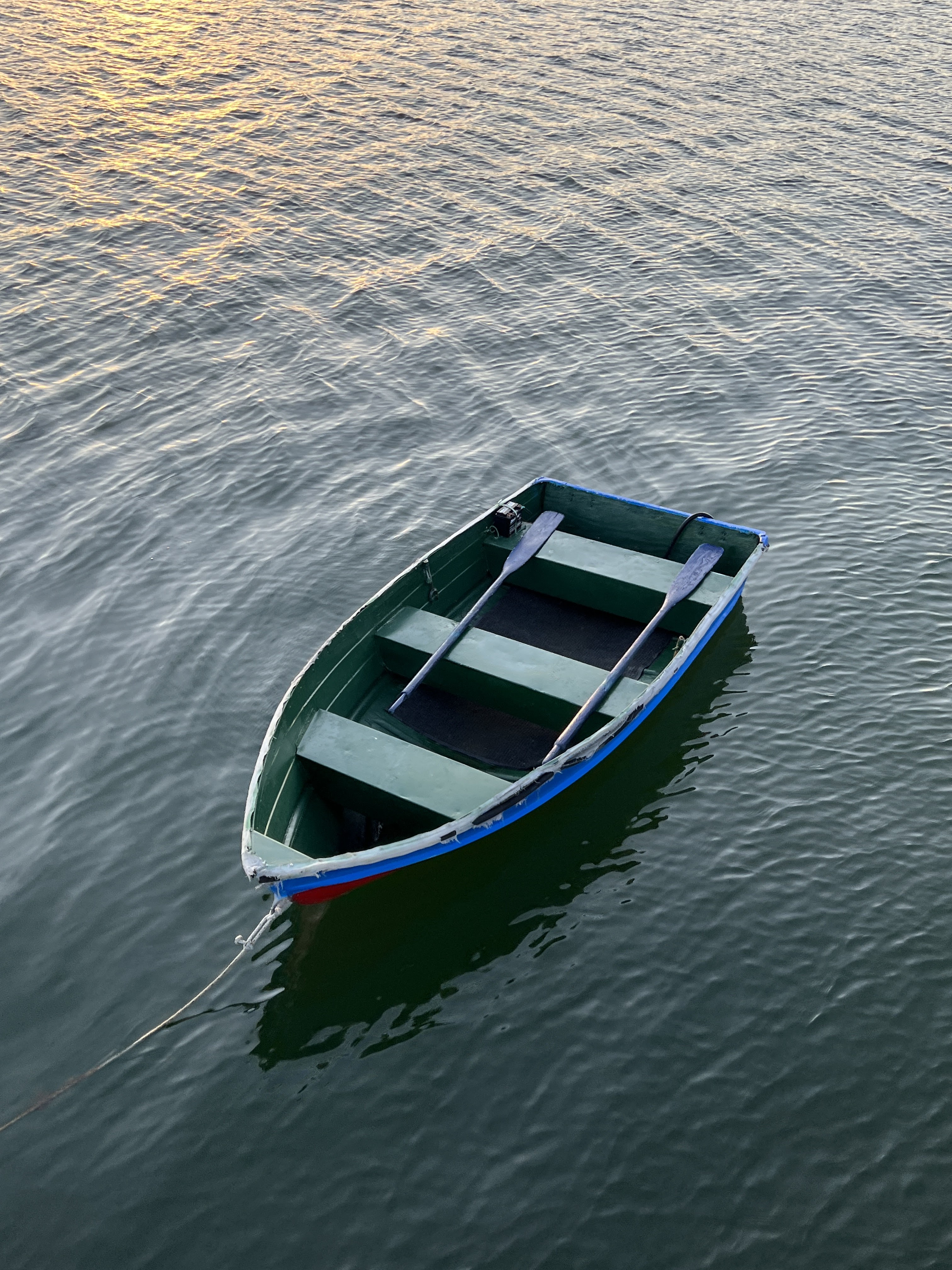
I try my best to give everyone some of what they want on vacation. My daughter loves sunsets and sunrises. To fill that place of awe in her, I chose an evening to go to a quiet place on Mt. Desert Island where we could catch it. We arrived early and walked onto the dock, taking some photos as we waited. This boat pictured above was what caught my eye. At 7:47, the time the sun was predicted to set, the sky was pretty, but not spectacular. Everyone was chilly (believe it or not with this heat wave going on) and they were ready to leave and have the dinner that was waiting back at the cottage. I surrendered my wish to have them awed and chalked it up to a night without a stunning sunset. As we drove back, I noticed the sky to my left was now lit up in shades of pink, but  we no longer had the view as the trees were taking the best seats. It turned out we were just too early.

And the night before…we were too late. We were driving when we saw a bit of the stunning sky, but we couldn't pull over. We kept driving in a hurry to find another opening among the trees and mountains and chose the high school as our spot. The kids asked us to stop the car and they started running toward the field. Mike and I drove around to the other side of the school where upon finding a better view, we hurried back to get the kids and bring them there. The scene was comical. Kids and a car chasing the sunset. The light was changing by the second and by the time we got out, we clearly missed the best of it.

Sure enough on our last night, Mike and I went out to pick up food and on the way home, the most unbelievable sunset was lighting up the lake. Another "pull over, pull over!" ensued and I ran across the street to capture it for Ella. This time, I did.

Sometimes we arrive at things too early, sometimes too late, and sometimes right on time. All of it is amazing because it is all fleeting. Things arise and they fade away. If they didn't change, if they were permanent, like plastic, we wouldn't have anything to get excited about. We would rarely feel a sense of awe. We need change and impermanence to fall in love. Again and again. 

On the surface, our yearly vacation hasn’t changed much in years. It isn't exotic. It doesn't make us more "worldly." But every year, I am aware that my kids are no longer the same and because of that, this yearly tradition of going to Maine is always changing, always a new experience. The impermanence of our age and of this time with the ones we love makes it all unique and special. When we remember this, we realize that we don’t need a lot of original experiences or excitement to be content, to be amazed by life, to be happy. It is always rich and the impermanence of it, chasing the sunset, is what makes it even more so.

🌻

Jean

Thursday, July 28, 2022

Anchored In Love


On Friday, I had one of those moments that will forever stay imprinted on my brain. I had just driven 3 hours to pick up my daughter from a two-week Appalachian Trail hiking trip. She had never done something like this and no cell phones were allowed (yay!) so I had no idea how the trip went. She's also a teenager, which means I have low expectations for the kind of hellos and goodbyes we might receive. I parked the car at the high school pick up spot and started to walk across the parking lot searching for which group she might be clumped together with, when suddenly I see her running toward me across the field of grass with her arms open and a huge smile on her face. I got the biggest hug I think I ever received from her. She is NOT a touchy feely person. I'm not sure there is a better feeling than the one I experienced in that moment. Since then, every time I revisit the moment, a huge smile beams across my face.

As we drove home, once we exhausted what there was to know about the trip and what she had missed at home (not much), I found myself noticing the surprise I felt at being loved and wondering why being loved continues to surprise me. This is not new. I seem to forget or not fully believe that I am loved. For me, it takes a lot of self-work to trust it. Even here, with my own daughter, I saw just how vulnerable my faith in being lovable is. I know that may sound sad. But after decades of inner looking, I know why it's there and so it doesn't feel so sad because I know it's not "true," just something that needs reinforcement. It also doesn't sadden me because I know that this is not only my experience, but many others also experience this slippery relationship to feeling anchored in love. I do the best I can to not let it get in the way of my close relationships because it is such a drag to love someone and have them not trust in it.

So what helps me to trust in love? It takes the steady presence of someone. People who repeatedly come close in one moment and go away in another, for no obvious reason, are not great matches for me. That's what I need from "the other," but then there is what I need from myself which is my own love. It's been a slow process, this learning how to love myself, but I do now. Of course I have my moments where my inner critic gets too loud, but for the most part, I look in the mirror and I like who I see. How could I possibly trust in the love of another if I didn't have my own love? How could I love another and let them be free if I didn't have my own love?

I used to think that learning to love myself was the only key needed. I now understand that we need two. We need our own deep affection and we need the steadiness of someone else, especially if it felt unknowable as a child (for whatever reason that may be). In my 20's, I remember one of my first therapists saying I needed to learn to love myself. I knew she was right and I found it frustrating because I didn't understand how to do that. It didn't come overnight and I now understand that it's a lifelong process of watering those seeds.

My invitation for this week is to practice anchoring in love. What does that mean? Here are some practices that help me:

  • I thank my body regularly for all it does for me.
  • I let myself pause and rest before I get to the place of "too much."
  • I take a moment to honor the work and effort I put into something so that I don't roll onto the next thing without saying, "thanks."
  • I look into the mirror at my face every night and see the beauty of a vulnerable human being and I smile at her. I see the young girl in myself and my heart softens toward her.
  • I remind myself to stay connected to those I love. It takes conscious doing and opening.
  • When I doubt love, I stop and ask, "is it true?" I wait for my higher self to respond. She tends to see more clearly.
  • I remember that I am part of a giant web of interconnected life. I am more than this body. This person who I identify as "me" is not separate from anything or anyone and, with that understanding, I love more easily because there is not much to be afraid of if I am part of it all.
  • I remember that to love is a choice and there is nothing to lose when it is given freely. At the same time, I don't bother trying to love someone who gives and retracts their love often. I can still show love and care without incurring the pain of not knowing what I will get or in the hope that "this time they will stay."  

You may have more ways of anchoring in love and I welcome you to share them with me. If you struggle with it, reach out, and we can see what would help to make the love you have stick.

🌻
Jean

Wednesday, July 27, 2022

A Mindful Life In Micro-Moments


Do you sometimes feel like you're not doing a great job living a mindful life? What does living a mindful life look like? What does it really look like? Stock images of people meditating can have it appear oh so simple and graceful. The image of someone sitting perfectly upright, aligned, appearing effortless, calm, at ease, and of course, in a beautiful setting, is not what I, generally, know of it. I have meditated in some very beautiful places, but even if I got that part of the picture right, I don't think I imbue what I see in these model meditators or a serene Buddha statue. My hair is a little off, my clothes a bit sloppy, my body a little more full than the people in the pictures, and if I'm outside (like most of these photos), I'm trying hard not to swat at the flies or mosquitos. A mindful life is not so perfect. Thank goodness. This means we can all live it.

For this reason, today I want to encourage the micro-moments of practice that add up to make a truly mindful life. In my mind, a mindful life (or call it a life of grace) involves presence (being in the moment), gratefulness (appreciating what's here), compassion (being able to be with suffering), joy (feeling connected), letting go (remembering impermanence), and the awareness that we are all connected to everyone and everything that is, was, and will be. Sounds like a tall order, but it's really not because we practice in small ways everyday and those micro-moments combined are what make a life a mindful one. We don't have to become something we are not. No huge transformations required. Here are some ideas of what it looks like:

  • Meditate daily. This is really not a be a big deal if we don't make it one. It's not mystical or magical. We don't need to set up a special room or get ourselves ready to do it. Keep it simple. Set a timer or show up to a group and practice every day. If all you have is 5 minutes, great. Just do it and make it a habit like brushing your teeth. Those 5, 10, 20 minutes add up and contribute to how present you are in the rest of what you do.
  • Bring your attention to your senses in small moments throughout the day. Feel the touch of the silverware as you empty the dishwasher. Hear the sounds of the gravel under your foot. Feel the water on your hands. Stop and smell a flower or the scent of wet trees after a rain. Feel yourself breathing at a stop light, as you listen to your friend, as you wait on line. Practice being present in micro-moments and you will find there is more time, space, and more to enjoy. 
  • When you wash your face at night or take a shower, as you touch the different parts of your body, say thank you. Thank you to these arms, these legs, this skin, this back, these eyes for all they do. Without this body, we can't experience this life. No one else will thank your body for all it does, for putting up with all the demands and criticisms we have of it. It does everything it can to heal and keep us going. "Thank you, thank you, thank you." 
  • Make note of what was good in the day, of what you created in the day, of what you received in the day. You can change the wording around like I just did to keep it fresh, but no matter what way you phrase it, it gets to the point of seeing goodness and appreciating. Make a note of the feeling behind each thing you name because that's what gratefulness feels like. It's not the thought, but the feeling that matters. And note just how much goes into what you named -- all of the people, resources, elements, conditions that came together for any of it to be. This reminds us of our interconnection. When we remember we are connected we tend to be kinder, more generous, more forgiving. It also reminds us just how incredible this all is. 
  • Having a hard moment? Something doesn't go the way you had hoped or expected? Someone says something that rattles you? Feeling the stress of too much of something or too little of something? Witness someone else or a group having a hard time? Bring in compassion. It's that simple. Don't push the pain or upset away; don't even try to fix anything just yet. Recognize suffering with a tender heart and be kind. Start simply. Feel the pain and form a phrase of loving-kindness. "May I have peace of mind. May I have relief. Or may he/she/they be gentle with themselves. May they feel loved." Whatever phrase brings relief, offer it up. Hard moments don't need to be met with more hardness. 
  • Feel yourself trying to control a situation? These are good moments to remember that all things change. Let it go. Easier said than done, but start with simple things. Someone cuts you off, let it go. Forgot to do something, let it go. Your appointment gets canceled, let it go. Newly washed car gets pooped on, let it go. Start small and practice releasing the things that, in the big picture, don't matter so much (at the end of your life you won't care). When we let ourselves find more flexibility with the small stuff, when the larger things happen, we have more resiliency, more faith, more understanding that this, too, will change.

We can't fail at mindfulness.It would be kinder to think less of seeing some grand change, but instead, allow ourselves to fill our days with micro-moments of presence, gratefulness, compassion, connection, and letting go and this is a "perfect" picture.

Wishing you a beautiful week.

Monday, July 18, 2022

Finding The Past In The Present


This writing is adapted from the talk given on Sunday, July 10, 2022. If you prefer to listen, you can find the recording here.

In mindfulness meditation, we talk about staying in the present moment, but what we know is that our minds, more often than not, bring us to the past, the future, or somewhere in our imagination. The focus of this talk is on the past.

A few weeks ago, my son and I took an excursion back to my hometown on the North Shore of Long Island. It is a place that is embedded in my memory as being one of the most beautiful places to live. As we made the tedious drive there from NJ, I wondered whether it would be as magical as my 15 year old mind, the age when my family moved from there, remembered it to be. As we pulled off the LI Expressway and found our way to the village of Laurel Hollow, it was indeed as idyllic as I had remembered.

I pulled down the quiet lane where we lived and it was hard not to be overwhelmed with the memories of the landscape I loved and wished we had never left. We drove the two miles from our old house to the town beach, a ride we would take on our bikes as kids. My son, seeing that the ride was a slight decline, asked if we had to peddle back uphill the whole way on the return. We did. It always felt exhausting and endless. Then he said something that surprised me, he said, "no wonder you love Maine, Mom." I never put it together. Mount Desert Island in Maine, the summer place I have been going to for the past 10 years, has many of the qualities like this area of Long Island without the mountains. But Maine, unlike Long Island, isn't drenched in childhood memories. It is a place of newer memories. A place where I found myself again. A place that is mine, unadulterated by the past. 

When we returned, I had to let this excursion digest for two weeks. Going "home," even to a place without the people there, isn't always easy. I felt how much of my current being is still wrapped up in the past and being there made it all so clear. The things I struggle with as an adult are woven into this place. Threads of belonging, money, beauty, privilege, longing, loneliness, and the goals, desires, struggles of my parents all woven into a thick tapestry that has influenced everything I have become.

This experience of returning threw me into a whirlpool of emotions that I thought I was done with. Memories, and the feelings they evoke, don’t work that way. We don’t get to choose to be done with them. We get to respond to them differently as we mature even if, at first, they dredge up those old responses. When we got back, I had to let them raise turmoil running in circles amok inside until they were ready to quiet down again. The whole experience was clarifying. I got to hear myself say, “well off course you struggle with these issues still!” I was able to be on my side in recognizing that there are reasons behind the places I continue to get stuck. At some moment in the week, in speaking with a family member about it, he said something and it was as if a bell of mindfulness went off reminding me of who I am now and what my values are now and suddenly the conflict I had with the past that had gotten dredged up quieted. 

Memories are charged. They have a volt of electricity behind them that inevitably causes a reaction. Some memories we simply want to close the door on. They are usually ones that have shame circling around them. As Brené Brown explains so well, shame likes secrecy. It gets stronger the more we stuff it down. Mindfulness teaches us that we don’t have to do that. We can make room for the difficult past experience and not judge it and not add onto it, but breathe with it and offer compassion for the hard feelings that come forth. We can recognize that other people also have this experience and we can offer compassion for this collective experience of being human. This moves it away from being a personal attack to a basic experience of living that we all share. The specifics may look different, but we all suffer; we all experience joy; we all want to be happy and loved and safe.

In my story, I chose to go to the past, well aware that I would be facing many feelings. I was surprised at how powerful they were, but going there was intentional. When we meditate and the past comes up -- when we start rehashing a conversation, when we replay a scene, it’s often unintentional. Or in our daily life, when this happens, we start ruminating and we stop being present. On the other hand, when we reflect, we are choosing to go over something with awareness. This is what makes reflection different than unconsciously ruminating. Reflection is not something that takes over, but something we decide to pay attention to with care in order to gain insight. Looking into our past has value when we look with curiosity and with kindness, seeing beyond what happened, to what we learned, possibly to find forgiveness, or to see more clearly. 

My son and I had a great day. I showed James a bit of where he came from. In going back with him, my guess is that he understands me a bit more. This is the gift of being able to go to the past – to understand more now. The past makes up who we are, but the present is who we choose to be. 

Certain seasons, holidays, places, objects, smells can cause memories to arise and when we stop and are still in meditation, the past is sure to resurface. What we do is practice observing it without getting caught in the web. In the present moment, observing the past. It is a very powerful ability because we look from the person we are now.

The next time you are in meditation, or at any moment in the day, notice when you find yourself going over something that is behind you and lean in. Step out of the thought and get curious about the feeling that comes with it, the reaction you have to it, what you are adding onto it. Then, let the judgment go, let the reactivity go and breathe with what’s here now as you behold it’s aliveness in you.

🌻
Jean

Wednesday, July 6, 2022

What Does It Mean To Be Productive?


Over the past couple of weeks the A Mindful Life community has been exploring two themes, productivity and procrastination -- cousins of sorts, and what an interesting exploration it has been. We've held questions like what does it mean to be productive? What does it feel like? What qualifies any action as being a "productive" one? And what's underneath productivity's opposite (or maybe its nemesis?), procrastination, and avoiding what's here? It's been a worthwhile investigation as it debunks many ideas we have on these subjects which, left unexplored, awaken our self-critic. One thing they both need is our kindness and care. 

One of the very revealing comments that came out of the exploration on productivity is that people feel productive when their body is exhausted or when they feel spent. Do we need to get to that point in order to feel we have been productive? When I asked the bigger question -- what truly makes an action/activity a productive one, very different answers came. Rather than checking things off a list or feeling "in control," these answers universally tapped into what really matters to us, to what we value. They were less concerned with what we can cross off, how much we accomplished, or what credit we received. It was quite beautiful to hear what people shared. It felt kinder, wiser, more loving.

At the end of our life, we won't be asking, "did I check everything off my to do list everyday, or did I achieve some position, or make enough money, or travel to all the right places?" I doubt it will matter so much.  When we notice ourselves judging our productivity in a day, a week, or year, it could be a good moment to change our way of evaluating to a more sophisticated one that asks, "in what ways did I cultivate what I believe matters most?" For example, if what matters most is presence, kindness, connection, generosity, healing, ask yourself what you did that was motivated from those places and see what you name. They are not often the big displays, but the smaller moves, gestures, words that accumulate to make a day, a week, a month, a year, a lifetime a "productive" one.

My invitation this week is to keep track. If we don't acknowledge what we have done that feels connected to our values, our life purpose, we will keep rolling through until the end, at which point we won't be sure if we lived how we aspired to. First, make a list of what values matter most to you in living. Now honor all of the acts at the end of a day, or at the end of a week, that cultivated what matters most to you. If you remove the judgement, you will see that there are many. See how much you have given and received from small moments where you complimented someone, drove a child somewhere, took care of your body, were present in a conversation, slowed down to take in a flower or a sunset, gave a project your genuine effort, helped a coworker, made a nourishing meal, planted a seed. 

Next week, I wIll share on procrastination, but until then, enjoy just how "productive" you are when you are living by what you value everyday. You are enough.


🌻
Jean

Wednesday, June 29, 2022

Living In Foul Ball Territory


Often, after finishing my workout at the high school field, I will stop at the bleachers by the baseball field to sit down and meditate. I look out over the expanse of playing fields and trees in the distance. It is a place near my home where I feel a sense of spaciousness with an unobstructed sky and quiet. In front of me is a fence and a sign that reads, "Foul Ball Territory." I have come to appreciate this sign as it appropriately reminds me to be awake as I enter meditation. I could imagine these signs posted sporadically everywhere. Aren't we always living in foul ball territory?


At any moment something may come upon us and the best we can do is be aware. Not on guard, but aware so that we can still enjoy the game. In meditation, we are always observing foul balls. They come in the form of a conversation resurfacing from weeks ago, or a feeling that we didn't know was lurking in the background that made its way forward, or an unexpected sound, or sudden anxious thought over...anything. Unlike literal balls falling from the sky, we don't have to react and protect our heads. Instead, the instruction is to observe, to be aware of what is arising, to make note. We give it room to float in and fade away without becoming it, without letting it take over, without adding onto it, without attaching to it, without "doing" something (fixing, changing, pushing it away). This is the practice and it has the potential to relieve us of a great deal of suffering...if we practice it.

I prefer to think that I live in foul ball territory. It keeps me from being shocked by things that go off-kilter. I don't get so attached to things being a certain way or moving in a particular direction. It feels more real to me. I have goals and dreams and directions I want to move in, and I am hopeful, but I can be all of those things without thinking that it will be smooth or that this is way it "should go" or that I can control it. Things often do go other than the way I might like them to and sometimes great and unexpected things come as a result. Most of it doesn't happen in the time frame I was expecting. The universe is much larger than me and the causes and conditions of things are so vast and intricately woven that I must learn to adjust. It's not powerless either because my slight tug on the fabric will have an effect. I am continually learning to welcome it all and to trust in foul balls. As long as I am aware of myself, I can meet what comes with grace. Living with grace to me is living with presence, being able to let go, slow down, offer compassion, live with kindness, and take mindful action.

We have had some significant foul balls landing lately. All things change. Waking up to what is here I can be mindful of what I think, say, and do next. I can choose what energy I am contributing. On the other hand, If my mind and body become one with the whatever is happening, it becomes very hard to have agency over how I feel and what I do next. I become a victim of myself and it never feels good. To avoid getting caught takes practice. We train ourselves to step back from our own mind and observe. The mind can observe the mind. We can watch whatever arises and learn that we can be present to it without reacting. We can feel disappointment, pain, fear, loss, anger and not let it take over. This doesn't just come. It is a training. Like any athlete we do our drills so that when game time comes, we are ready. 

My invitation this week is to form an agreement with yourself to practice meditation everyday. Whether it is 5 minutes, 20, or 30 does not matter. Just commit to sit and while you're sitting, be awake and observe. Meditation is not an idea. It is something we do. It won't be of use unless we do it continually. Find some space from the thoughts that come and feel without reacting because that one feeling, that one thought is not all of you and it will change. Remember that practicing meditation is an act of kindness and we can all use some of that.  Wishing you a good week.


🌼
Jean

Thursday, June 23, 2022

Having Mercy


We don't always get off to a good start. Some days we roll out of the "wrong" side of the bed and our day starts off rough. Sometimes we start a conversation on the "wrong" note. Sometimes we begin a project and realize we are going about it all "wrong." Sometimes we wish we just hadn't thought, said, or done something. This is what it is to be human. Thank goodness we are all imperfect. And thank goodness, we can always start again.

In meditation we are instructed that when we become aware of having drifted into thought, we get to enjoy coming back to the breath in the present moment and simply begin again. We gradually learn to do that as many times as we need in a single meditation period without any judgement. It is the best practice we have for those more significant moments in life when we don't like the way something has started -- whether it began with our own actions, reactions, or with a dynamic between ourselves and another. We can always start over. We start over every time we forgive, say we are sorry, take a pause and change a direction, or take a new step.

Sometimes we forget and think it's done, finished, finite, messed up for good, irreparable, fixed, and permanent. It's not a very kind way to be with ourselves, or even with others. My invitation this week is to notice those moments when something doesn't feel good and let yourself begin again. Mid-conversation with your child, spouse, parent, co-worker, and the feeling isn't good -- take a pause and start over. You can even say it, if it is appropriate, "can I try this over again?" Maybe you find yourself scrolling on social media when you intended to start a project and suddenly 30 minutes is gone. No big deal. Begin again. And, the most important part is to do it without berating yourself. What is it like to start fresh?  No matter what doesn't feel good, the moment you recognize the uncomfortable feeling, ask yourself, "is there some way I can start this again?" Only you can let yourself off the hook. Staying stuck on it serves no one.

When we allow ourselves the opportunity to start over, we soften that hardened stance we can easily take that is born from fear. When we learn to be generous and have mercy on ourselves, it spills over and we become more willing to let others be imperfect, and have fresh starts, too. 

Wishing you all a week of fresh beginnings whenever you need them. And don't forget, you can always say it aloud and let your imperfect self be seen so that we can all be imperfect together.


🌼
Jean

Wednesday, June 22, 2022

Dreams


The last day of school always held for me a great feeling of spaciousness. Freedom from assignments, tests, papers, and routines. It felt like long held pressure finally allowed to release. The summer opened up time to just be. Time to wander and get bored, to hang out without an agenda, to play and to dream. I didn't know that this summer sense of open, decompressed time would never happen again in the same way once I was out of high school. In adult life, we have to carve it out and we have to learn how to find spaciousness throughout the day in our way of living. By being more present, slowing down, reacting less habitually, listening and speaking more mindfully, we gain a sense of space. And when we have space, we can dream. At any age, we all need to keep dreaming. This summer, let's welcome it.

Can you return to a question kids get asked more than adults: what dreams do you have? In our adult lives, we may not allow ourselves this question anymore. Does it feel like there are too many "practical" needs in the way to dream? I often feel that way. But, our dreams are important. They connect us to what we value, to what brings meaning and purpose. They make us inspired and alive. We need dreams. Our creativity is born in them. There is a reason for them. 

I invite you to take a pause:

1) Ask yourself, "what dream do I currently have that I have not been paying attention to?" Close your eyes, come back to your breath, and wait for as long as is needed for the answer to arise from deep within. Or maybe it will be right there at the surface.

2) Welcome it. Don't worry about how to achieve it, just hold the space for it and honor it. It does have a reason for being there. Enjoy the feeling of having it. It means you are very much alive.

3) Now ask, "what would it feel like if I followed the path of this dream?" Again, don't worry about how to accomplish it, let the feeling it gives you to move toward it inspire your next action. What energy does it produce in your body if you imagine making your dream happen? What color captures the feeling? How would life feel different knowing you followed your dream? 

4) Without making more of it than it is, what one step could you take this week that moves you a little closer to it? Think baby steps -- a phone inquiry, a  page of writing, clearing a physical space in your home to start something, updating your resume, signing up for a class. Say, "yes" to something that sends the signal to yourself that this matters. Your dreams matter. You matter.


🌼
Jean

Tuesday, June 21, 2022

Creating What's Here


While so much is out of our control and we have the challenging task of making peace with letting go or allowing what is here to be here, in every moment, we do have the choice to create and to water the seeds of what is to come.

In Sunday's Night Meditation, I offered up a question we can ask ourselves everyday: "what do I want to create today in my thoughts, in my words, in my actions?" When I talk about creating, it is not for a select few "creative people." We all create. Everyday we create the life that's here, whether you see yourself as a creative person or not. If I honk my horn, if I rush my kids, if I’m impatient with myself, if I’m distracted when I listen, I am  creating energy that is getting sent out and having its own ripple effects. Those ripples generate more thoughts, words and actions in other people and from the earth itself. Equally so, when I am present with someone, listening without interrupting, being generous as I drive, being warm to the salesperson in the store, being compassionate and patient with myself, conscious of what I choose to consume and its effect on the earth that sustains us, I am generating a very different, positively contagious movement in the world.  You can't get more creative and impactful than that!


Just think that each day we get to begin again! We get to walk out the door into our day and meet the world inspired by what we want to see develop, unfold, manifest and then generate that by our presence, by where we direct our mind, by what we say, and how we move. 

My invitation this week is to ask yourself: "what do I want to create today?" Take a moment now and try it on. You might close your eyes, drop back into the rhythm of your breathing, and ask yourself the question. See what words come that capture what you really want to create here. What do you want to see manifest? Describe it to yourself and when you're done describing it, what does it feel like to be inspired by your own ideas of creating this experience we call life? We can ask ourselves this question every day. I welcome you to download the image above if it helps remind you!

Wishing you an inspired week in this interim time between spring and summer.


🌼
Jean

Monday, June 6, 2022

Holding Both Sides

Much has happened since I wrote last week's A Mindful Pause. I began the week offering an exercise to water the seeds of joy in summer. A day later, we witnessed the aftermath of a horrifying school shooting. The week came to a close with Memorial Day weekend, a time when many celebrate the unofficial start of summer, while honoring those who sacrificed their lives for us. All that went on in this one week and Memorial Day itself captures so accurately the paradox of what we have to do in life -- hold both sides of something at the same time. Suffering and joy exist simultaneously and we find our way back and forth between them.

My husband and I have a tradition of going to upstate New York for this long weekend. It is always replenishing as we reconnect with the natural beauty of this earth, slow down, eat food we normally wouldn't eat, and rest. As we turned around to come home this morning, I thought about the pain many people suffered in the last couple of weeks, as well as the reason for this holiday itself and it felt at odds with the feeling of ease and play that this weekend also inspires. But, are they really at odds? When I look more deeply, I know that this is what we must do all the of the time -- simultaneously hold what is painful and what is joyful.

Sometimes people feel guilty for enjoying something when there is so much suffering going on, but this feeling of guilt does little for anyone. And sometimes people only see suffering and don't allow themselves to take in joy, beauty, and goodness. There is another way that is more kind. This way does not push one away so that we can have the other, but instead cultivates a heart and head space large enough to hold them both. Over the weekend, my heart was never far from the pain of the recent shootings AND I could enjoy the walks through the country, savor meals out, take naps, and stop to look at the rain drenched peonies in the garden where we stayed. This allows us to keep going and do the work we do.

We will face more suffering and sometimes it will feel downright frustrating and defeating when some of it can be prevented. Sometimes it will remind us of our complete lack of control. Sometimes it will knock us down for a while until we can get up again and take a next stride forward (which we will do). But no matter what, while all of that difficulty is happening, the ants are still crawling on the peonies for this brief moment they are in bloom, and we get the honor of witnessing their lush opening. When we stop for these wonders, while whatever storm is passing through, we get to be awed and filled with delight, even as our eyes are still wet from our tears.

As the week begins again, my invitation is to pause and see the alternating, maybe even contradictory, feelings that may be present in this moment in time and allow yourself to swim between them without any judgement, without making one more important than the other, without saying one should not exist. Instead, allow yourself to be in all of this experiencing, just as it is. Enjoy what you enjoy. Cry when you cry. Do what you can to contribute to what is beautiful and good. Make room in your house of self for all that arises. 

I'd like to close honoring and thanking all of the men and women of our armed forces who have served for us. Aware of the many lives lost and at risk for our safety and freedom, I send out deep gratitude for what has been and continues to be given. 

Wishing everyone feelings of safety, inspiration, and aliveness in this week. I leave you with the words of Mary Oliver.

🌼
Jean

The Summer Day
Who made the world?
Who made the swan, and the black bear?
Who made the grasshopper?
This grasshopper, I mean—
the one who has flung herself out of the grass,
the one who is eating sugar out of my hand,
who is moving her jaws back and forth instead of up and down—
who is gazing around with her enormous and complicated eyes.
Now she lifts her pale forearms and thoroughly washes her face.
Now she snaps her wings open, and floats away.
I don't know exactly what a prayer is.
I do know how to pay attention, how to fall down
into the grass, how to kneel down in the grass,
how to be idle and blessed, how to stroll through the fields,
which is what I have been doing all day.
Tell me, what else should I have done?
Doesn't everything die at last, and too soon?
Tell me, what is it you plan to do
with your one wild and precious life?
~Mary Oliver